
Marigold Leaves and Gooseberries: Everyday Remedies Rooted in Assam’s Soil and Seasons

Healing is found in the quiet corners of everyday life, in the gestures and rituals passed down through generations. In Assam, these traditions take shape in simple acts: a crushed leaf, a soaked seed, a handful of rice transformed by the night. But this is not a story unique to Assam. Across the world, nature’s quiet remedies speak the same language of care, rooted in a shared understanding that healing is both local and universal.
For many of us who grew up in Assam, the first lessons in care didn’t come from clinics or labels. They came from the land.
I remember scraping my knees on the lawn at our house while playing soccer. The injury was never dramatic; there was rarely a need to call an adult. Instead, I would crouch beside the garden, pluck marigold leaves, and crush them into a green paste between my fingers. I pressed it against the cut; it stung at first, then cooled. And then, without a second thought, I’d return to the game.
It was a child’s medicine cabinet: immediate, instinctive, and rooted in trust. No formal training was necessary; we learned by watching, repeating, and trusting what had been shown to us.
A Landscape of Healing
Assam’s healing traditions were shaped less by formal systems and more by agrarian rhythms, guided by the monsoon, the rivers, and the soil. Families relied on the plants that grew abundantly in the fertile climate of the Eastern Himalayas. These remedies were rarely thought of as alternatives but simply part of daily life.
The changing seasons played a quiet role in guiding the use of these plants. Some remedies were shaped by the monsoon rains, when marigolds grew plentiful in gardens. Others, like the Bhut Jolokia, were harvested and preserved in the warmer months, only to provide warmth during winter’s chill. The land’s cycles always offered something useful at the right moment, and those who knew it could always find a remedy close at hand.
Much like the sattras, the Vaishnavite monasteries where Sattriya dance evolved both as devotion and practice, these remedies grew in spaces where life and tradition intertwined. Healing was not an event but a rhythm, a quiet flow attuned to the seasons and the land.
Plants and Practices
A few remedies formed the backbone of childhood memory, quiet tools of well-being that required no ceremony. Many of these plants thrived in the humid soils of the Brahmaputra Valley, where monsoon rain and fertile silt turned gardens into quiet pharmacies. Here are a few plants and household practices that shaped daily life in our home, drawn from memory and not a comprehensive record:
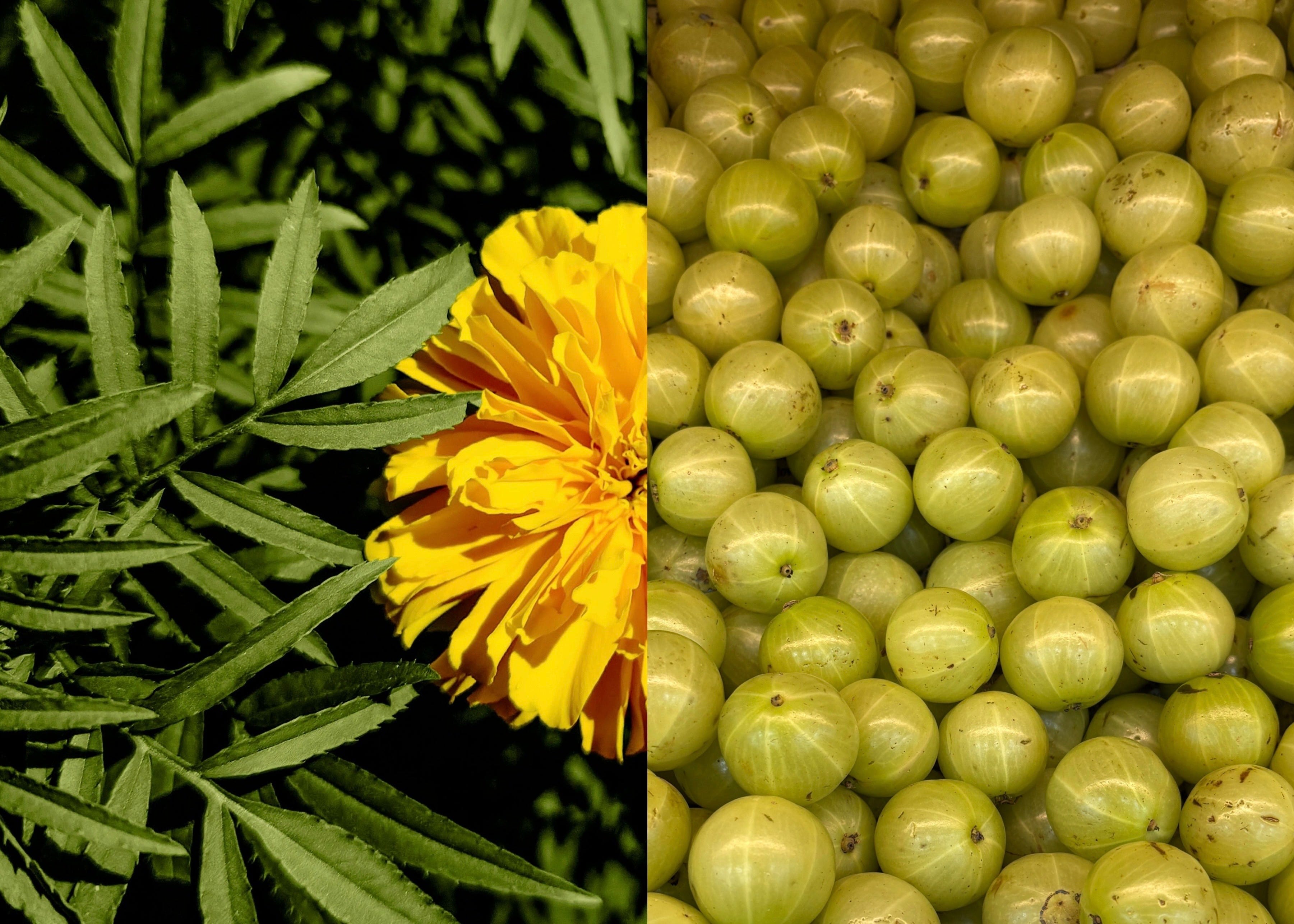
Genda Paat (Marigold Leaves): The common garden marigold, not the calendula of formal herbal texts, served as a practical folk remedy for minor scrapes. Crushed into a poultice, Genda Paat soothed wounds, grounded in the wisdom of generations.
Aamlokhi (Gooseberry): Raw or pickled, aamlokhi was available through the harvest season and preserved for later use. Its tartness was believed to “cool the system”; in winter, it provided a burst of strength. Long before nutrition science became dinner-table conversation, we learned its benefits.
Neem: Neem leaves were another quiet remedy. When skin rashes appeared in humid weather, the leaves were boiled and the water cooled for bathing. Their bitterness carried the reputation of cleansing both body and home.
Bhut Jolokia: Even the fiery bhut jolokia found its place in household wisdom. A small piece added to chutney during cold months was believed to clear the head and warm the body.
Xilikha (Terminalia chebula): The small fruit was a familiar presence in Assamese households for its gentle medicinal properties. Often used to support digestion or incorporated into simple remedies, it was valued for its enduring ability to nurture health, quietly bridging the everyday rhythms of food and care.
Manimuni (Centella asiatica): Manimuni leaves grew easily along damp edges of gardens and ponds. Small and round, they were often crushed into chutney with mustard oil, green chilies, and salt. Elders believed the herb strengthened memory and soothed the stomach.
Ritha (Soapnut): In our home, large brown soapnuts (Sapindus mukorossi) were soaked and rubbed until they foamed, becoming a natural shampoo. The soft lather was practical and seasonal: harvested after the monsoon, dried under winter sunlight, and stored in kitchen tins until needed.
Tulokhi (Holy Basil): Courtyards nurtured a tulokhi plant. Tended with reverence, it was steeped into warm infusions, chewed fresh, or gently crushed for fevers. It offered comfort as much as cure.
Poita Bhat: Leftover rice soaked overnight and eaten cold the next morning was a traditional farmer’s breakfast. Now recognized for its probiotic nature, poita bhat has long been valued for its cooling properties, in addition to its ability to support digestion and gut health, making it a staple on hot summer mornings.
Khaar: Few ingredients show the closeness of food and healing in Assam more clearly than khaar, an alkaline extract made by filtering water through the ash of sun-dried banana peels. Used to cleanse the stomach and lighten the body after heavier meals, khaar was both ingredient and remedy. Its preparation was as much culinary memory as medicinal tradition.
Many of the remedies I grew up with in Assam resonate with those found in other cultures as well. While not exact equivalents, these parallels reflect a shared human instinct to turn to the natural world for care. Marigold leaves, used in Assam to soothe minor wounds, have their American counterpart in calendula, often used in creams and ointments for skin irritation. Similarly, Aamlokhi (gooseberry), revered in Assam for its cooling and strengthening properties, has a counterpart in the elderberry, celebrated in the U.S. for boosting immunity during flu season. Tulokhi, or holy basil, so cherished in Assamese homes, is akin to the holy basil many American herb gardens hold for its calming and immune-boosting qualities. Even Ritha, or soapnut, used as a natural shampoo in Assam, finds a parallel in castile soap, a mild, natural cleanser. These similarities remind us that healing often begins in the same quiet gestures.
Across practices, these remedies share a quiet consistency in both presence and limit. They ease more often than they cure. A saltwater gargle softens a sore throat, easing irritation without addressing deeper causes. Ginger settles the stomach in moments of nausea. Fennel seeds bring lightness after heavy meals. Honey coats the throat and quiets a cough. Coconut oil restores moisture and calm to the skin. Each offers relief that is immediate and familiar, even if partial. Together, they suggest a kind of care that does not claim to heal everything, but responds gently when the body asks for it.
Everyday Wisdom
Much of Assam’s everyday healing knowledge was not written down in formal texts. It grew from lived experience, shaped by agrarian life, oral tradition, and close familiarity with the land. While some practices echo broader South Asian traditions, Assam’s rivers, soils, and humidity shaped distinctly local methods.
Herbal use varied by region: what grew easily in floodplains differed from what thrived in the hills. Ritha washing was more common in Upper Assam, where ritha trees grew abundantly. Aamlokhi was widespread across the Brahmaputra Valley. Khaar, deeply tied to the local banana variety, remains uniquely Assamese.
Where Memory Meets Medicine
As I write this, I’m struck by how much was absorbed through repetition rather than instruction. No one explained why Aamlokhi was good for the stomach or why Khaar belonged at the beginning of certain meals. We learned simply by watching: the way my grandmother plucked Tulokhi leaves at dawn, the way my mother soaked rice overnight, the way my father crushed Genda Paat with practiced ease.
Even now, when the seasons shift, I find myself reaching for the same comforts: sesame seeds in winter, a bowl of Poita Bhat when the heat rises, a Ritha cracking gently under my thumb, releasing its faint scent of earth.
These gestures connect me backward, toward the people who healed without naming the act.
Keeping the Knowledge Alive
Today, many of these traditions are fading. Convenience has replaced habit, and packaged goods have displaced plants. Even in Assam’s villages, this knowledge is no longer fully intact, carried now in fragments, habits, and memory.
These practices still endure, though unevenly, rooted in the relief they offer and in the memory, identity, and intimacy of land-based living they hold. They remind us that healing once grew within arm’s reach, in gardens we tended and seasons we respected.
Much like the rhythms of Sattriya dance echoing through Assam’s sattras for centuries, these quiet remedies carry the pulse of Assam’s cultural inheritance: steady, humble, and deeply connected to place. They deserve to be remembered because they remind us who we are when we listen to the land, where the wisdom of nature remains quietly relevant across borders.
So beautifully composed, Munindra .Your words carry the healing properties of old. I appreciated how you brought together past practices and present applications. A reminder that nature can still exert its power to soothe, if not fully heal as science femands.